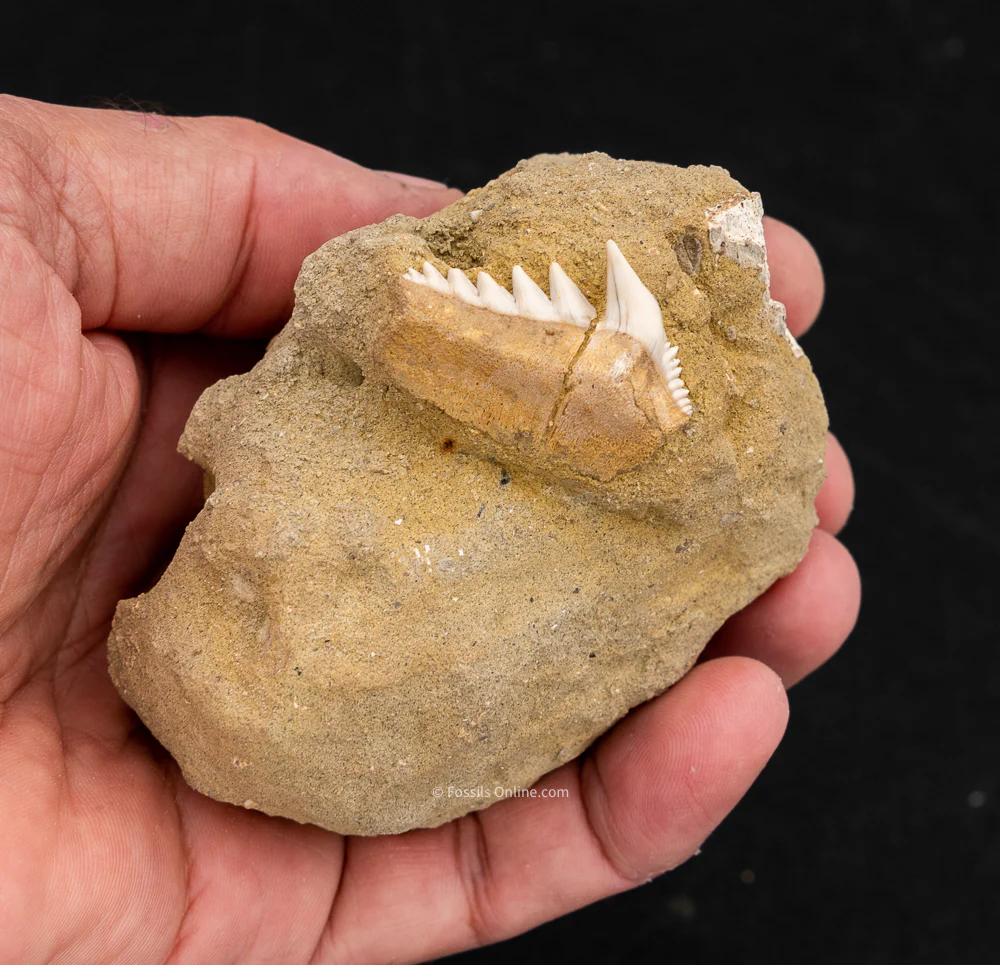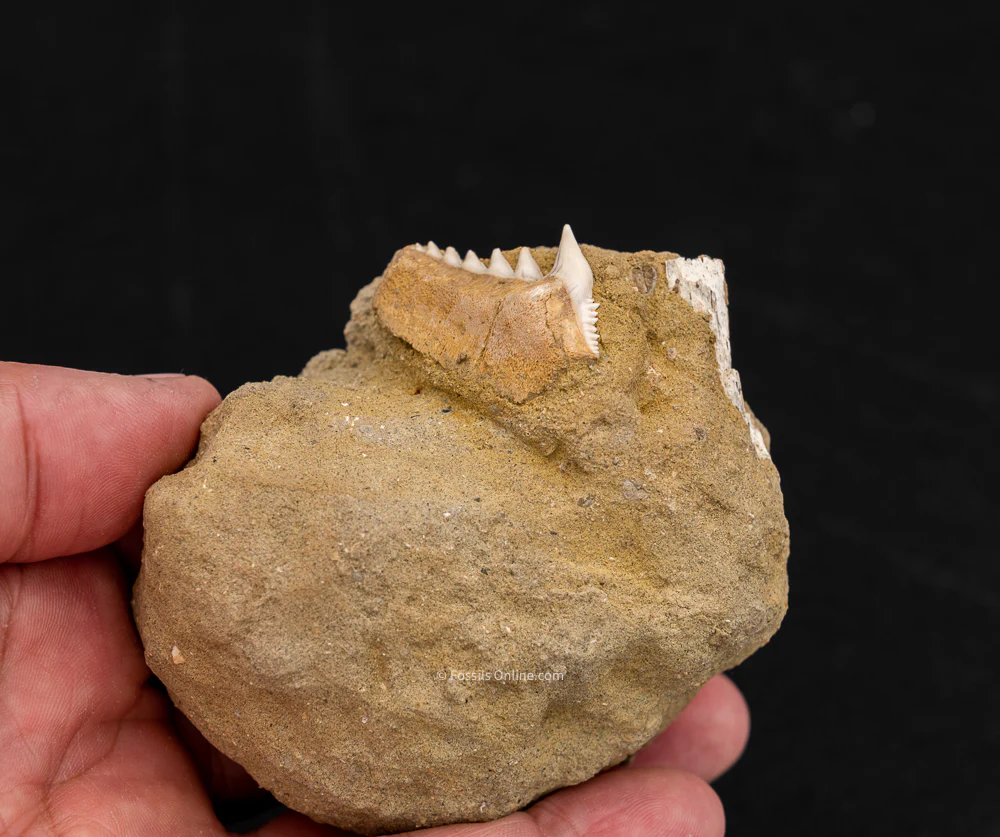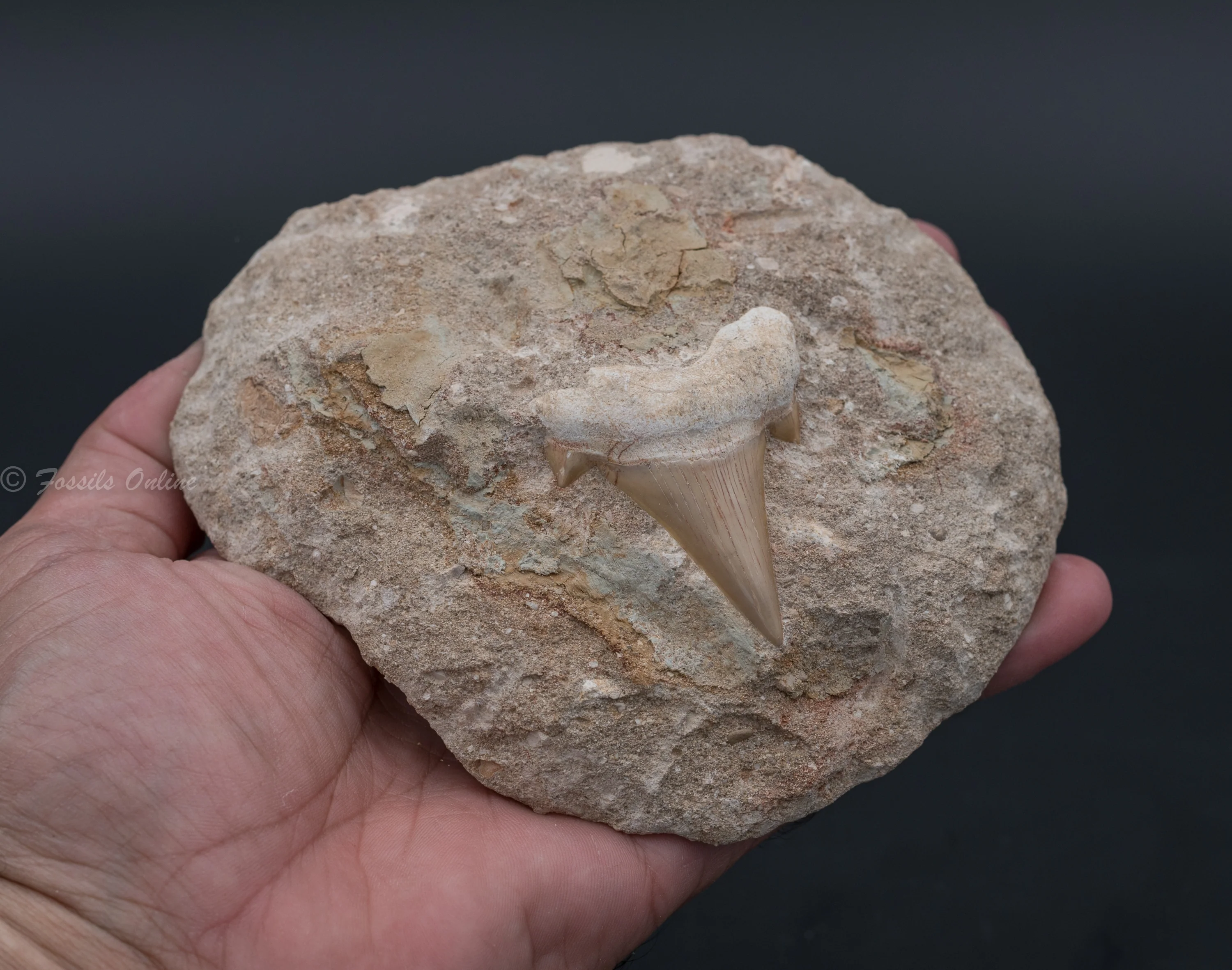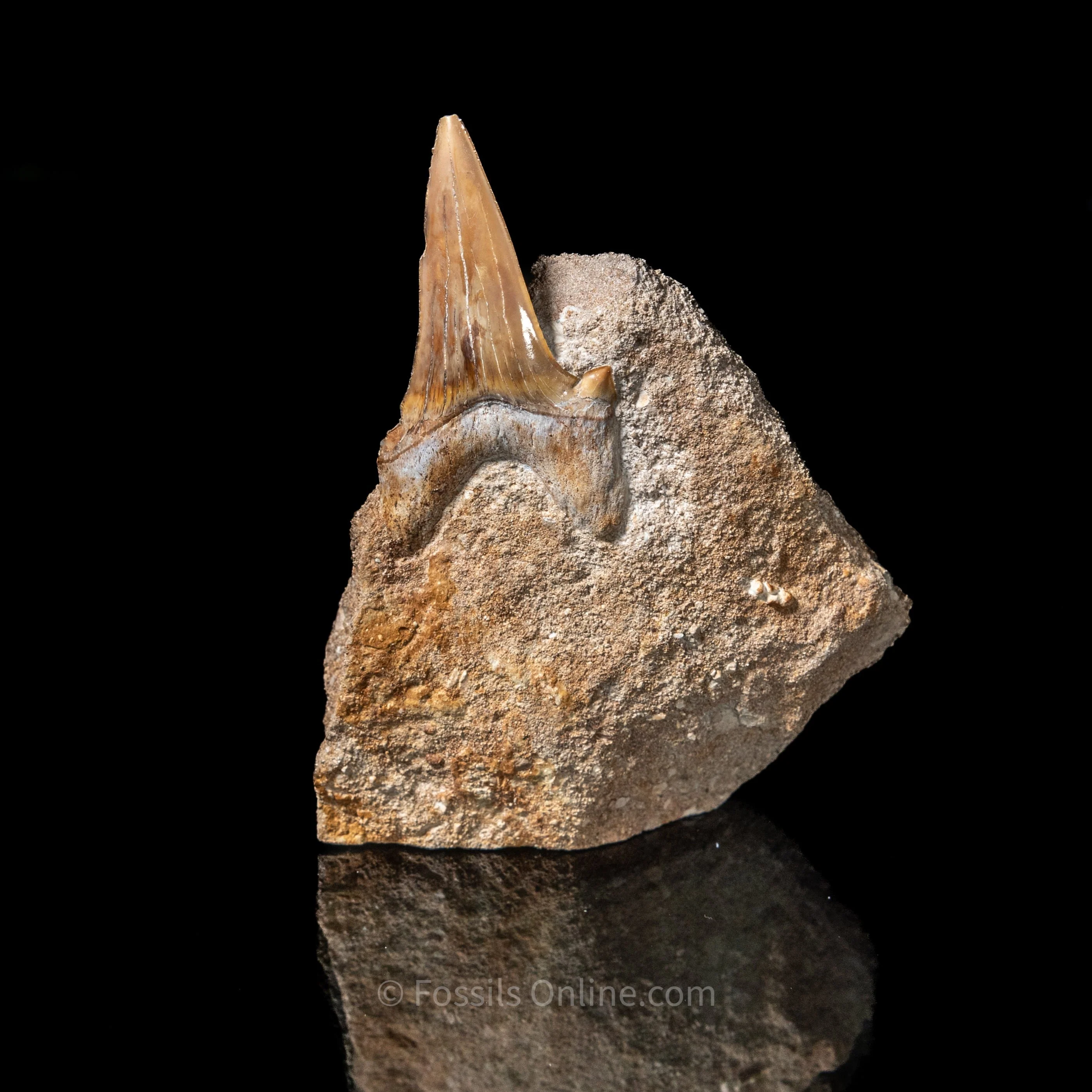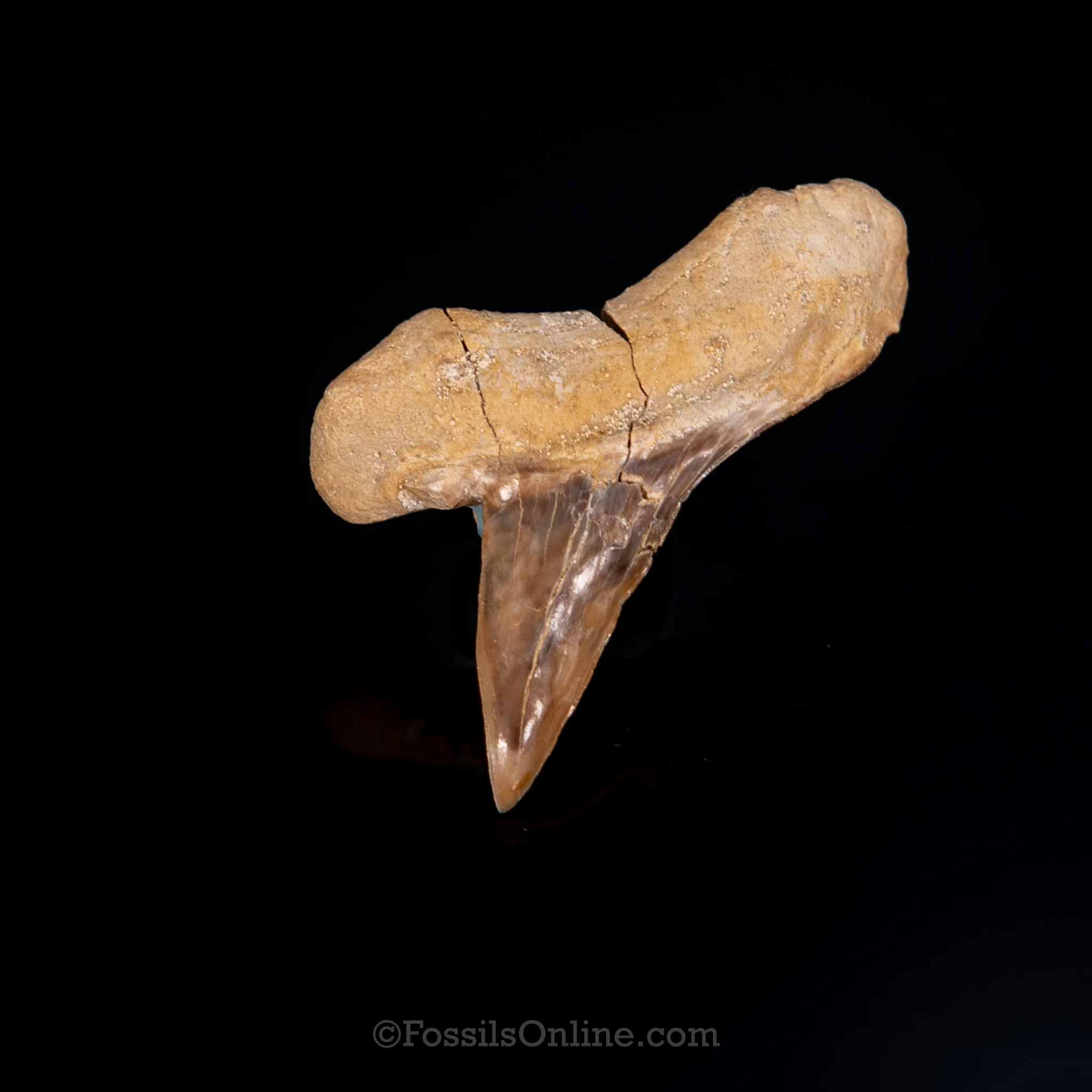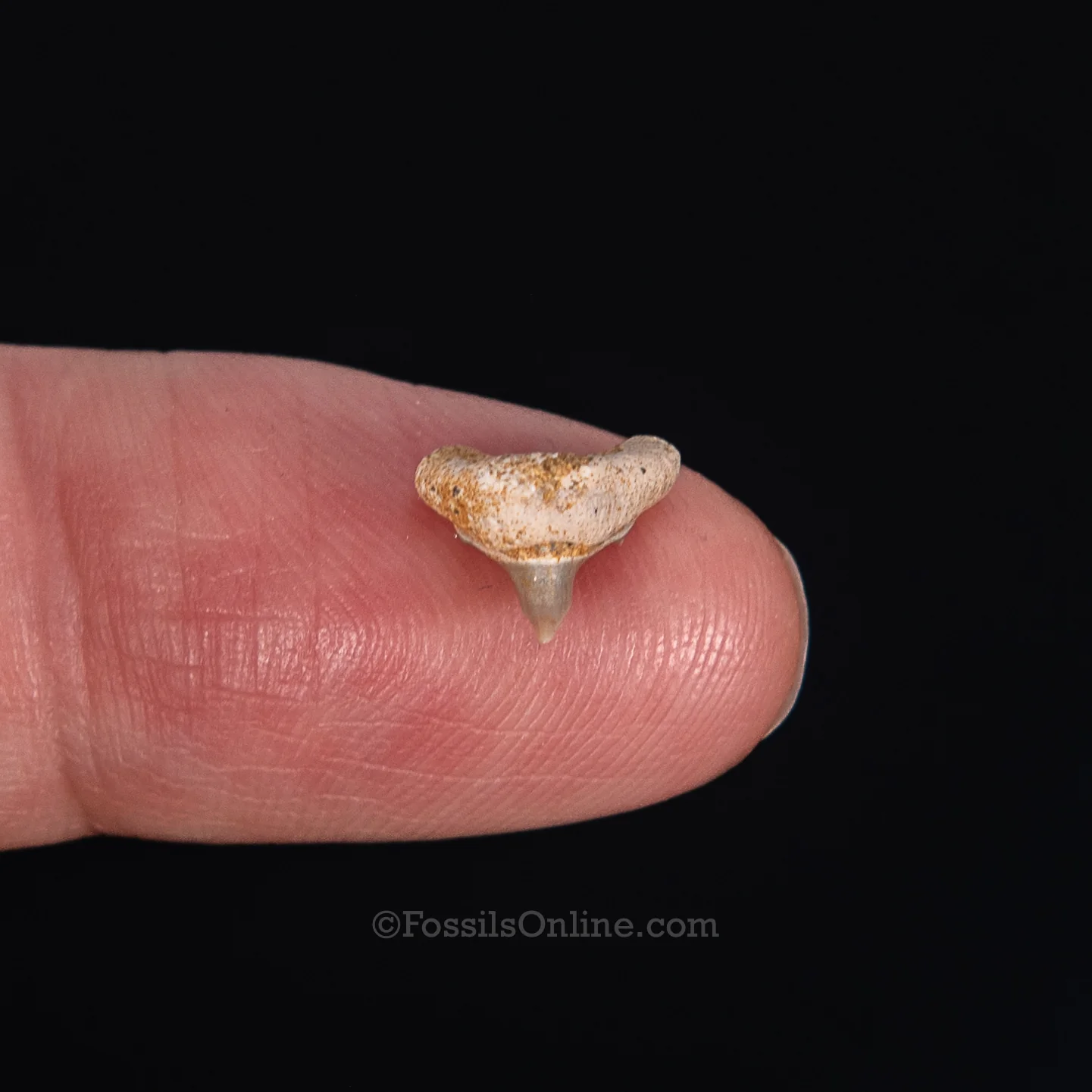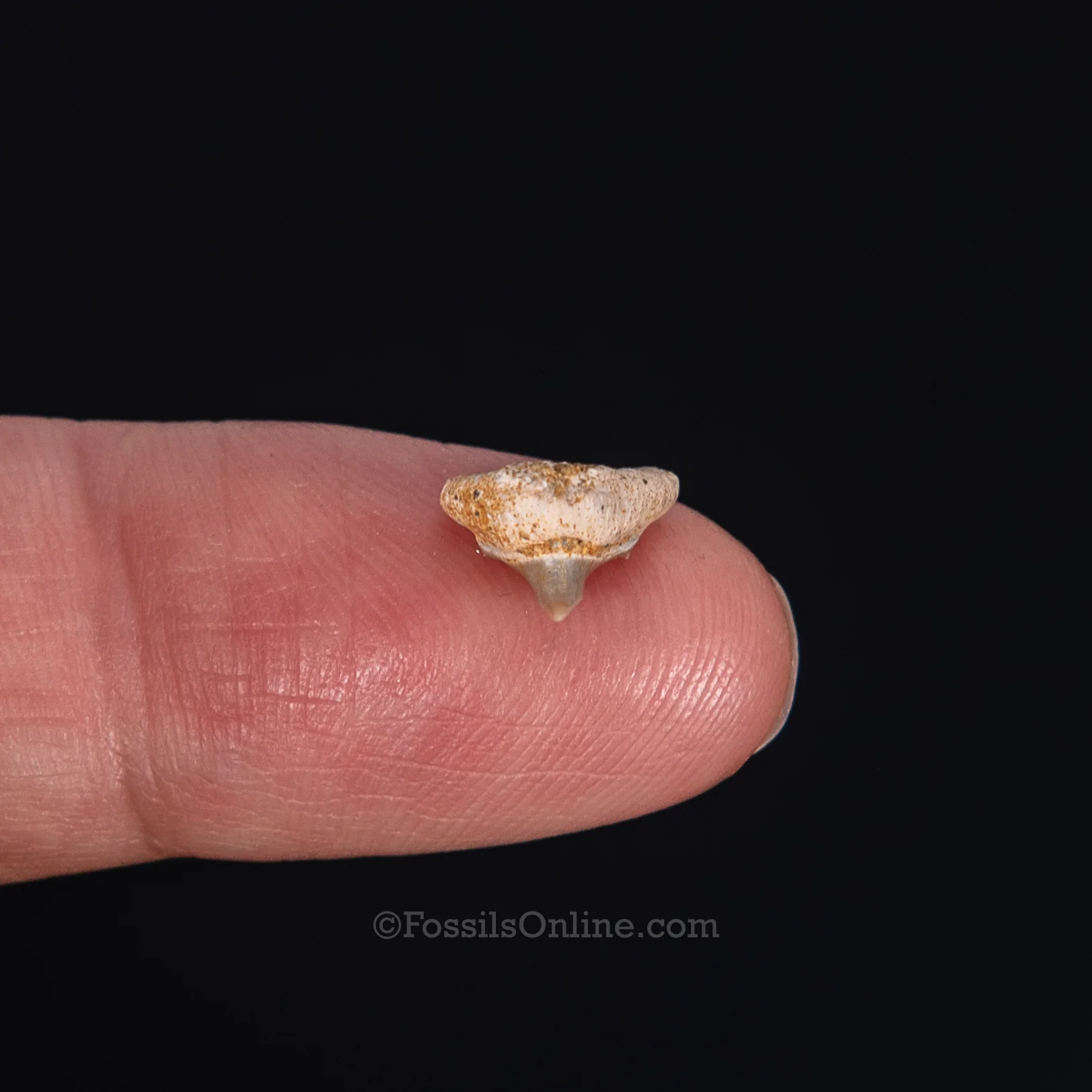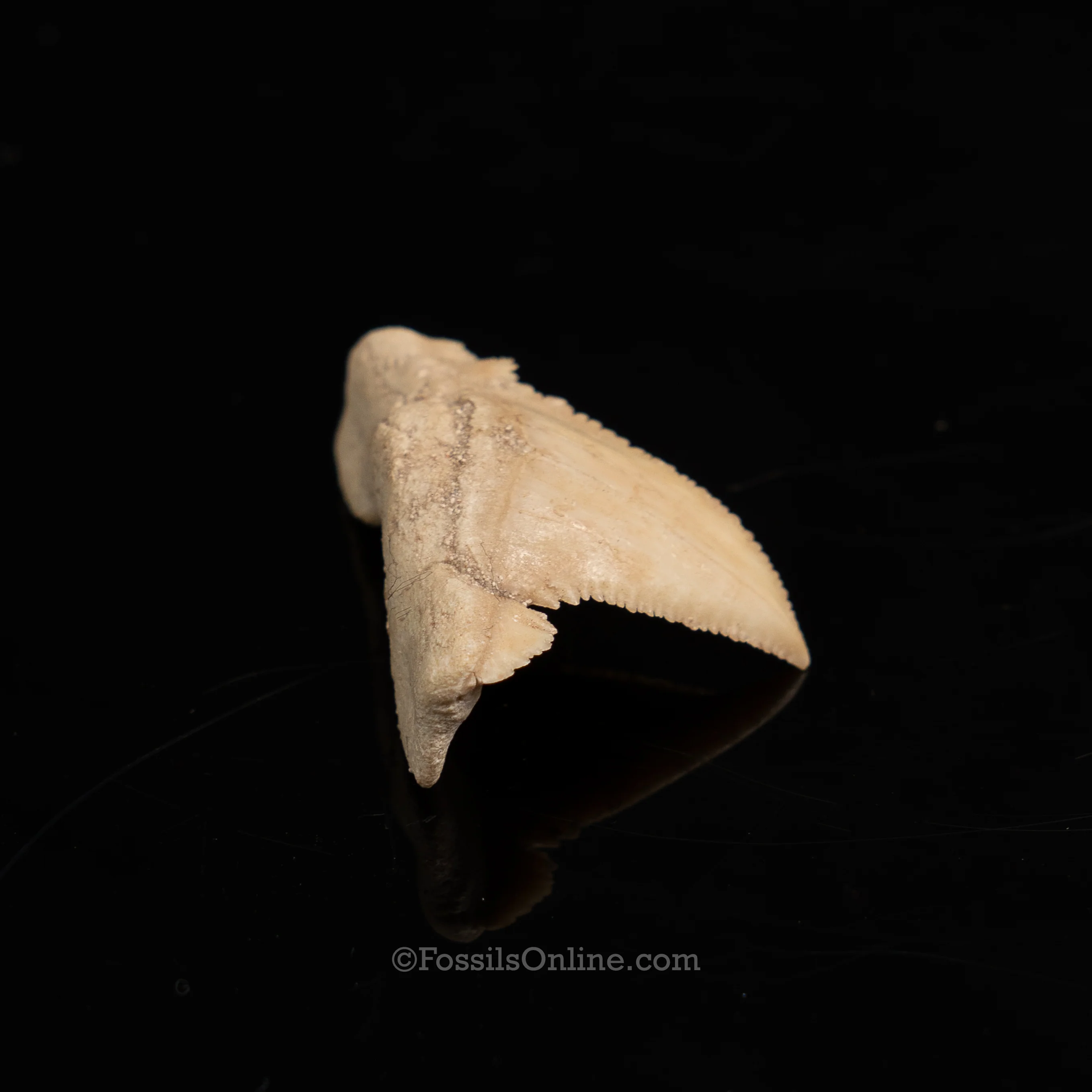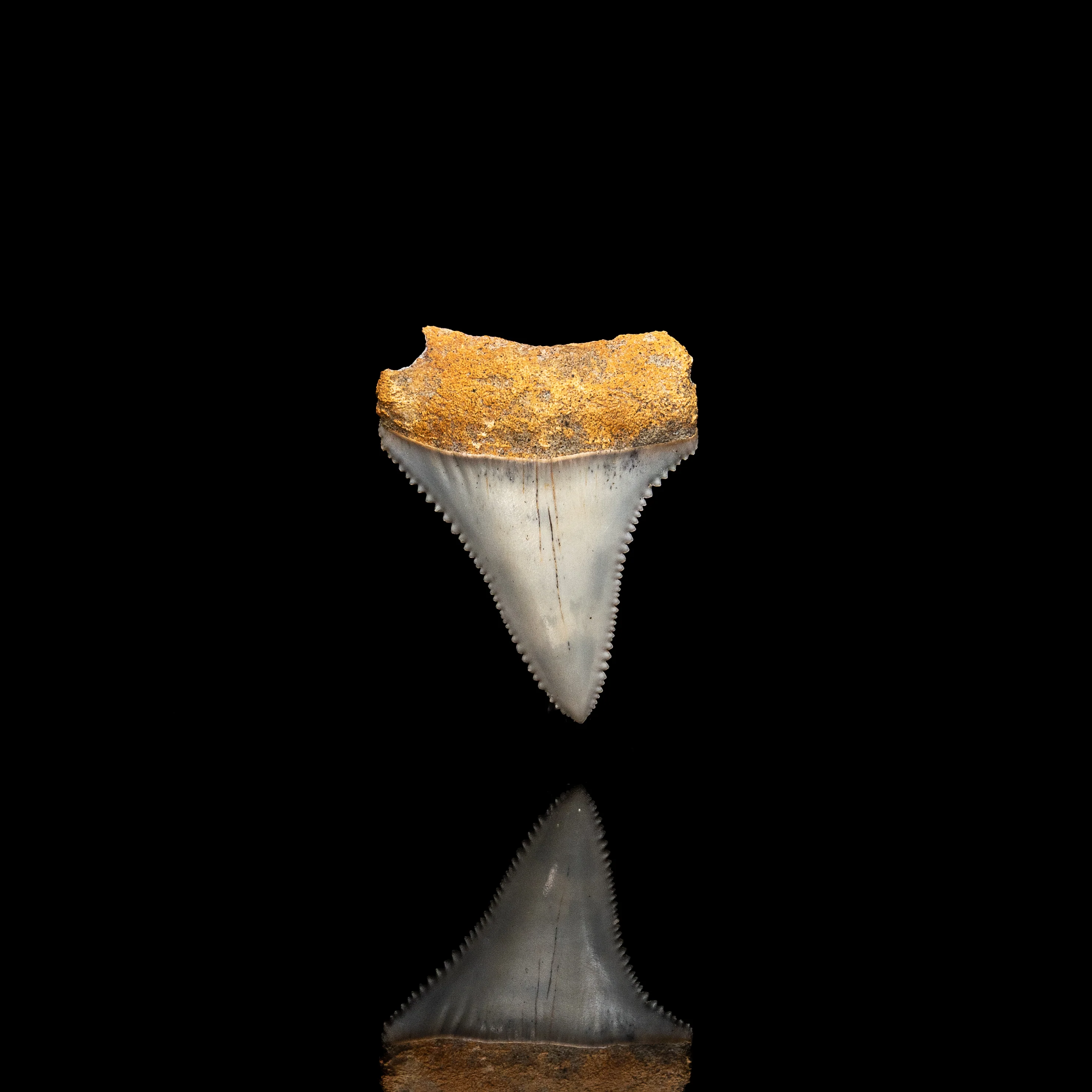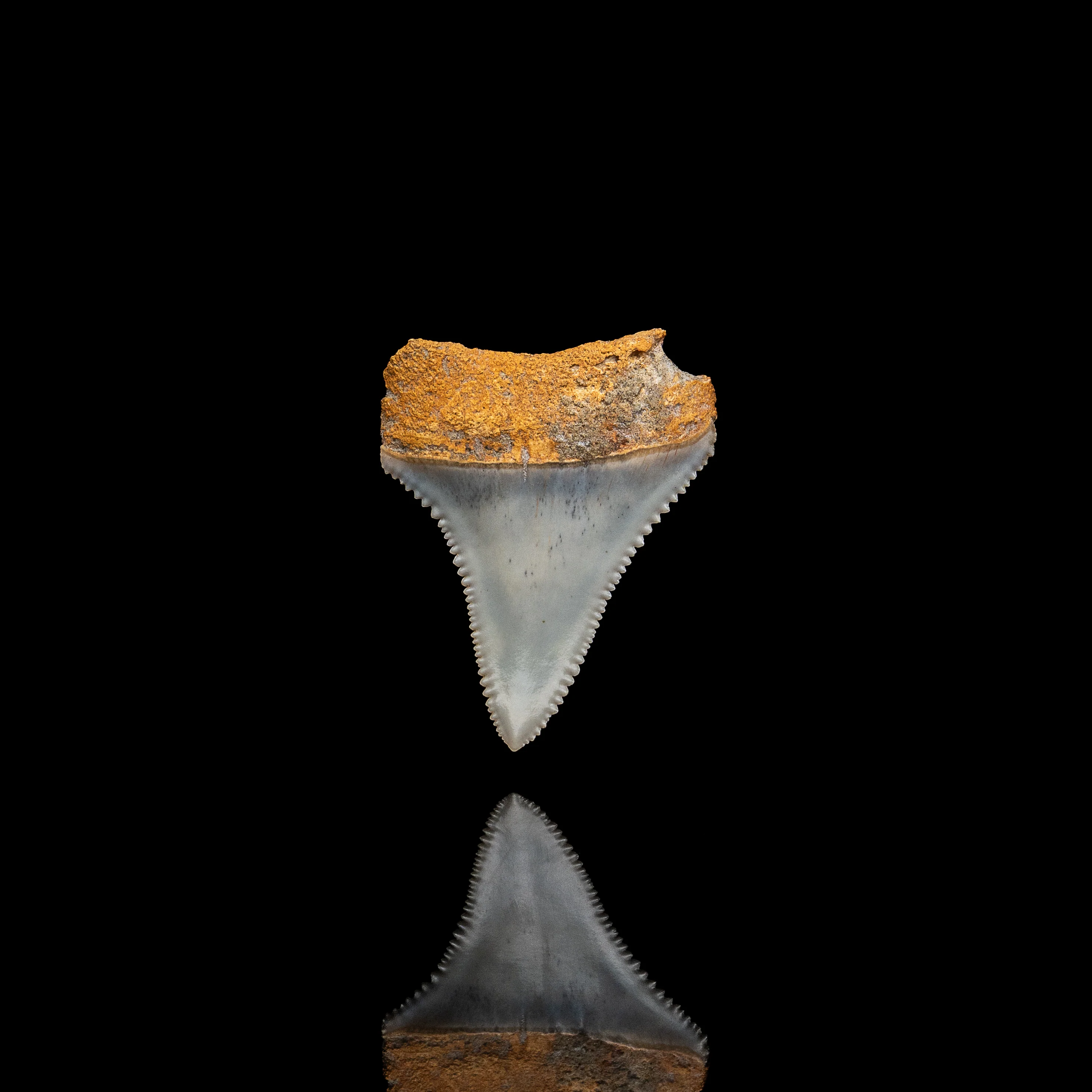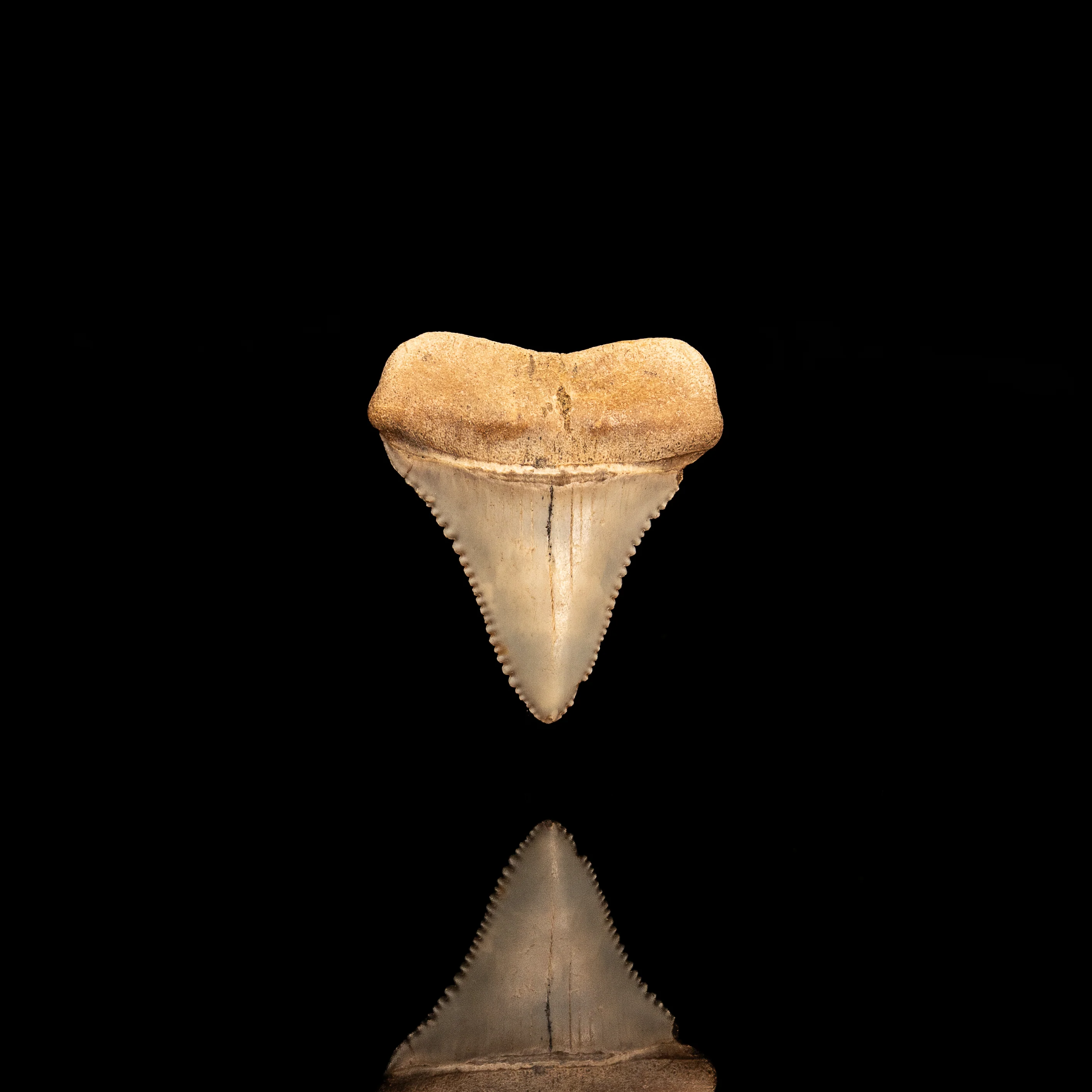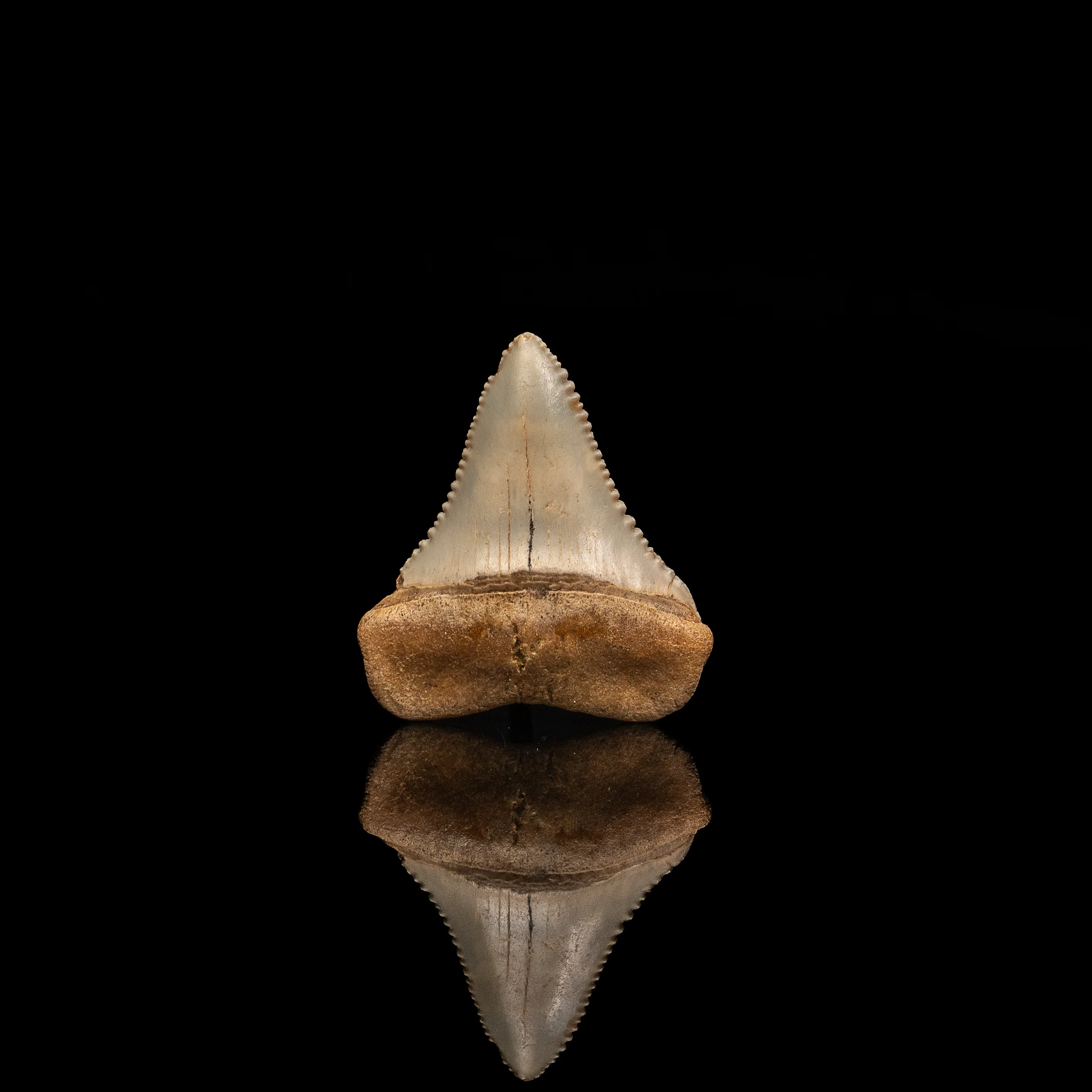

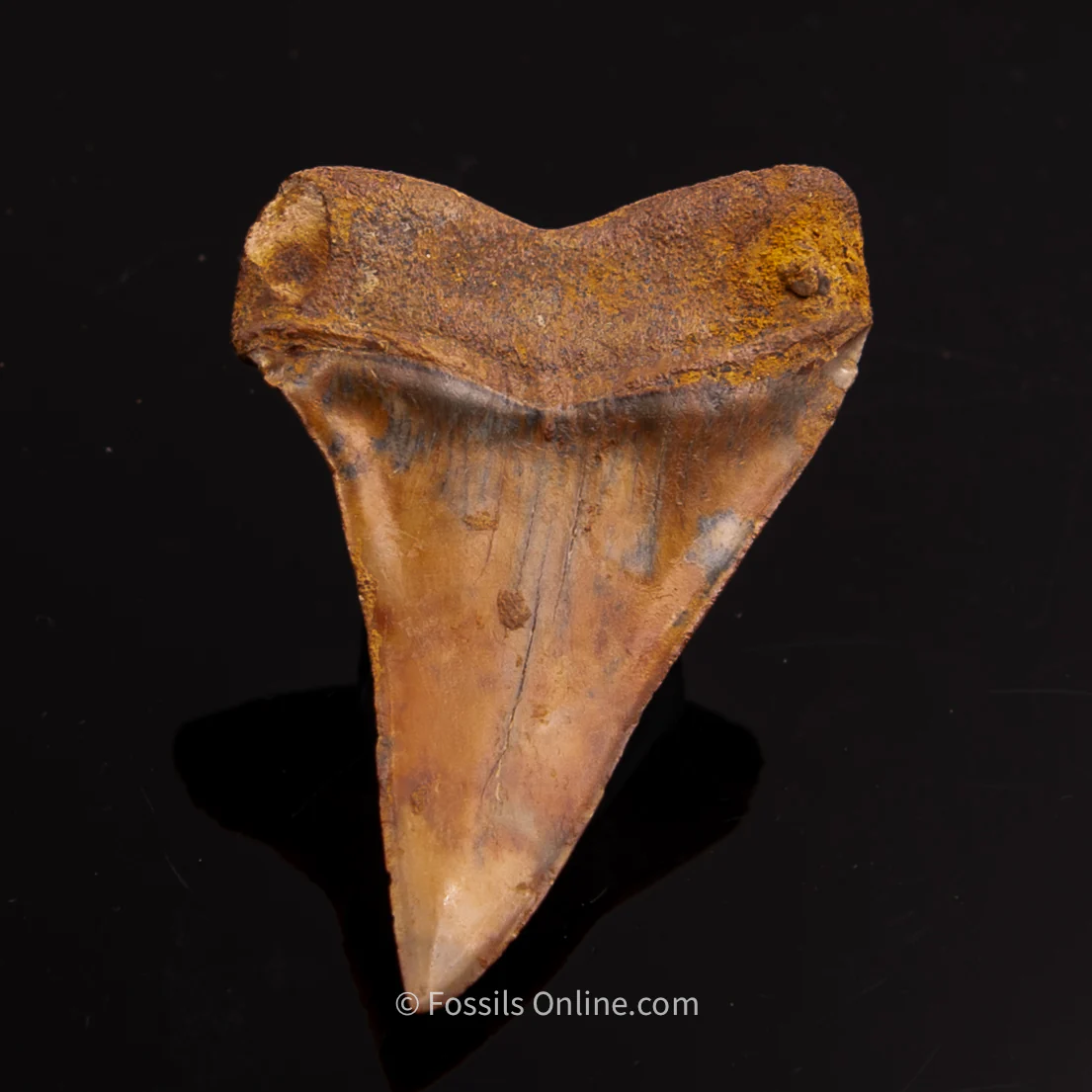
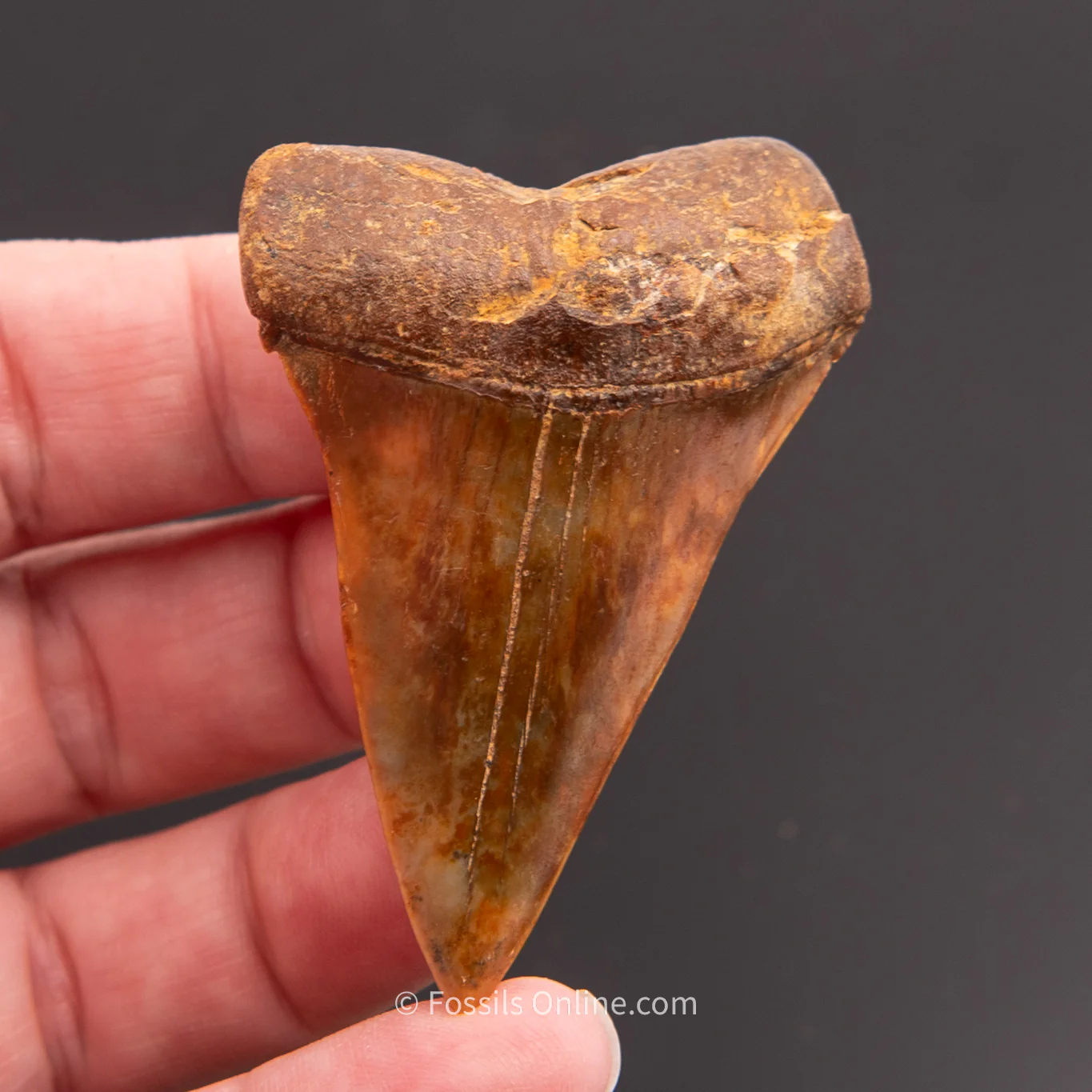
C. hastalis Chile 2.18"
This c. hastalis specimen has a stunning, one-of-a-kind coloration and semi shiny enamel
Carcharodon hastalis, often referred to as the Broad-toothed Mako, was a large prehistoric shark that lived during the Miocene to Pliocene epochs, approximately 23 to 2.6 million years ago. Its fossils, especially its distinct broad, triangular teeth, are frequently discovered in the phosphate mines of Aurora, North Carolina or other parts of the world like Chile. These teeth are characterized by their smooth edges and lack of serrations, differentiating them from other prehistoric sharks.
Carcharodon hastalis reached lengths of about 30 feet and was a dominant predator in its marine habitat. Its diet likely consisted of marine mammals and fish, which it captured using its specially adapted teeth designed for grasping and slicing. As a top predator, Carcharodon hastalis played a crucial role in its ecosystem. The species eventually became extinct, potentially due to changes in climate and prey availability.
Product Information
Product Information
Shipping & Returns
Shipping & Returns
Description
This c. hastalis specimen has a stunning, one-of-a-kind coloration and semi shiny enamel
Carcharodon hastalis, often referred to as the Broad-toothed Mako, was a large prehistoric shark that lived during the Miocene to Pliocene epochs, approximately 23 to 2.6 million years ago. Its fossils, especially its distinct broad, triangular teeth, are frequently discovered in the phosphate mines of Aurora, North Carolina or other parts of the world like Chile. These teeth are characterized by their smooth edges and lack of serrations, differentiating them from other prehistoric sharks.
Carcharodon hastalis reached lengths of about 30 feet and was a dominant predator in its marine habitat. Its diet likely consisted of marine mammals and fish, which it captured using its specially adapted teeth designed for grasping and slicing. As a top predator, Carcharodon hastalis played a crucial role in its ecosystem. The species eventually became extinct, potentially due to changes in climate and prey availability.